
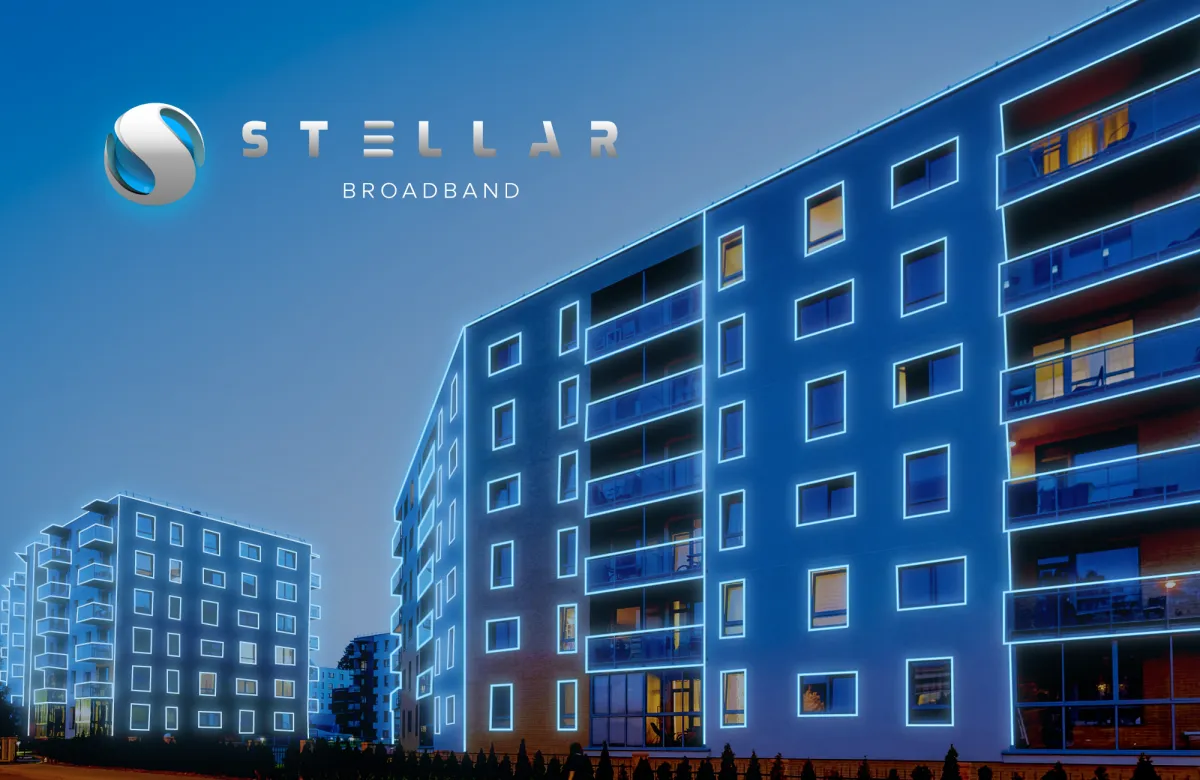
Why Wi-Fi Has Become Infrastructure in Multifamily Housing
The quality of a building isn’t measured on opening day. It’s measured by how reliably its infrastructure performs years later.
That principle increasingly applies to connectivity. As multifamily properties become more dependent on Internet access, smart-building technology, cloud-based systems, and connected devices, the network supporting those technologies has become a fundamental part of the building itself.
For residents, reliable Internet access supports work, education, entertainment, communication, and everyday life. For property teams, connectivity supports access control, package management, security systems, and building operations. What was once viewed primarily as a resident amenity is now part of the property’s core infrastructure.
“Wi-Fi is no longer viewed as a ‘nice-to-have’ or marketing driven amenity, but as foundational infrastructure that directly affects community operations, resident satisfaction, and long-term asset value,” Richard Laing, President and COO of STELLAR Broadband said.
From Amenity to Infrastructure
The shift in how managed Wi-Fi for apartments is viewed has accelerated as residents use more connected devices and buildings adopt more technology.
Remote and hybrid work have made dependable connectivity important to where people live. Streaming, smart-home technology, and connected devices continue to increase network demand.
At the same time, the building itself has become more connected. Access control, security cameras, package rooms, energy monitoring, smart thermostats, key management, and other building systems increasingly depend on reliable network infrastructure.
That means connectivity problems can affect more than a resident’s ability to browse the Internet or stream a show.
“When connectivity is designed well, it fades into the background, but when it isn’t, it impacts nearly every aspect of the resident experience,” Laing said.
Good connectivity is often invisible because it simply works. Poor connectivity, on the other hand, becomes noticeable very quickly.
Where Connectivity Decisions Go Wrong
One of the most common mistakes is treating connectivity as a commodity expense rather than a long-term infrastructure decision.
Initial cost matters, but focusing too heavily on price can overlook the factors that determine network performance over the life of a multifamily property, including capacity, scalability, redundancy, coverage, support, and integration with other technologies.
A network designed around yesterday’s usage assumptions may not be equipped to handle today’s demands.
The problem becomes particularly apparent when infrastructure is underbuilt or technology systems operate independently. Internet, Wi-Fi, access control, security, IoT, and energy management may each involve different vendors, support teams, and equipment.
When something goes wrong, determining where the problem originates can become a problem in itself. Property teams may spend significant time coordinating between vendors simply to determine who is responsible for fixing an issue.
The challenge isn’t necessarily that individual systems are poorly designed. It is that they may not have been planned as parts of the same connected environment.
The Hidden Operational Cost of Poor Wi-Fi
The cost of an unreliable network isn’t limited to equipment, service calls, or resident complaints. There is also a human cost at the property level.
When property-wide Wi-Fi isn’t properly designed or managed, leasing, maintenance, and management teams can become the unofficial IT department. Employees may find themselves troubleshooting connectivity complaints, resetting equipment, or coordinating with multiple technology providers.
“One of the most commonly overlooked impacts of poorly designed or unmanaged Wi-Fi is how quickly it becomes an operational and staffing problem, not just a technology issue,” Laing continues. “When Wi-Fi isn’t engineered strategically, the burden almost always shifts to on-site teams who were never intended to function as IT support.”
These interruptions add up over time. Time spent troubleshooting technology is time property staff aren’t spending on leasing, resident relationships, maintenance, and other responsibilities.
There is also an accountability issue.
“In fragmented connectivity environments, where access points, Internet service, and support are handled by different vendors, property staff are left in the middle when something breaks,” Laing said.
For residents, however, the distinction between vendors rarely matters. If the building’s Wi-Fi, smart lock, package system, or another connected service isn’t working, the property is often the first place they turn for answers.
Connectivity and the Resident Experience
Residents increasingly evaluate a property based on more than its physical amenities. A building can have excellent common areas and amenities, but those benefits don’t compensate for an unreliable connection when residents depend on the Internet throughout the day.
This is especially significant in multifamily and affordable housing communities, where Internet access can support employment, education, healthcare, and communication.
Reliable connectivity has therefore become less about providing an additional perk and more about meeting an increasingly basic expectation.
“Reliable, high-quality connectivity is no longer a differentiator, it’s an expectation,” Laing said.
That expectation changes how properties should approach network design. Providing Internet access to individual units is only one part of the equation. Multifamily connectivity needs to account for device density, resident demand, building layout, common areas, smart-building systems, and future growth.
Is Property-Wide Connectivity the Right Approach?
As connectivity becomes more central to property operations, owners are taking a closer look at how Internet service is structured.
Traditional retail models allow individual residents to select and manage their own Internet service. While that approach offers flexibility, it can also create different providers, equipment, service levels, and support experiences within the same community.
Property-wide or bulk connectivity models take a different approach by treating the network as a community-wide system.
Potential operational advantages include more consistent service, greater visibility into network performance, simplified support, and the ability to design infrastructure around the needs of the entire property.
However, there isn’t a single connectivity model that makes sense for every community. Cost, resident choice, property characteristics, existing infrastructure, operating strategy, and long-term technology plans all need to be considered.
As the industry perspective suggests, “The most successful owners work closely with their technology partners to design flexible, scalable solutions that balance performance, financial outcomes, and resident needs.”
This is particularly important in mixed-income and affordable housing. Tighter budgets don’t eliminate the need for reliable connectivity. They can make thoughtful infrastructure planning even more important because replacing or substantially upgrading an underbuilt network later can be considerably more disruptive.
Designing for Future Demand
Today’s network requirements are not necessarily tomorrow’s requirements.
Bandwidth demand will continue to evolve alongside remote work, cloud applications, streaming, connected devices, AI-driven applications, and smart-building technology. That makes scalability important during both new construction and major property renovations.
“Owners and operators should approach connectivity decisions with the same long-term mindset they apply to their core building systems, designed for scalability, resiliency, and adaptability over the life of the asset,” Laing said.
Fiber internet for apartments, for example, can provide a foundation for future capacity increases. Properly planned fiber internet infrastructure can allow future upgrades to focus more heavily on network electronics rather than requiring costly structural changes.
But scalability isn’t simply about having faster speeds. Network planning also needs to consider device density, coverage, capacity, and simultaneous demand.
A property may have adequate bandwidth on paper but still experience poor performance if the wireless network isn’t engineered to distribute that capacity effectively throughout the building.
Resiliency Matters Too
The more dependent a building becomes on technology, the more important network resiliency becomes.
A connectivity outage can affect more than residential Internet service. Depending on the building’s technology systems, an interruption could affect access control, security cameras, package management, smart-building platforms, or other operational systems.
This makes redundancy and network design important considerations from the beginning. Diverse network paths, appropriate segmentation, engineered Wi-Fi, monitoring, and centralized management can all contribute to a more resilient technology environment.
The goal isn’t to build a network that never encounters a problem. No technology infrastructure can eliminate every potential failure. The goal is to build one that can better withstand problems, identify them quickly, and recover with minimal disruption.
Building for the Life of the Property
Connectivity should ultimately be approached with the same long-term perspective as other major building systems.
The question shouldn’t simply be, Does this network work today?
It should be:
Can it handle the property’s expected demand? Can it support the technologies being installed today? Can it adapt to technologies that haven’t been adopted yet? And can property teams manage it without creating unnecessary operational burdens?
Those questions become increasingly important as buildings become more connected.
A well-planned network supports residents, property staff, and building systems simultaneously. It provides the capacity to handle current demand, the flexibility to accommodate future technologies, and the resiliency necessary to keep critical systems operating.
“Deploying fiber infrastructure that can scale in both capacity and device density allows future upgrades to be driven primarily by electronics rather than costly structural retrofits,” Laing said.
Connectivity may no longer be something that can be added to a property as an afterthought. It is becoming part of the infrastructure that determines how well a building functions over time.
And while residents may rarely think about the network when everything is working properly, that may be the clearest sign that it was designed correctly in the first place.